10.9.13

Curious colour

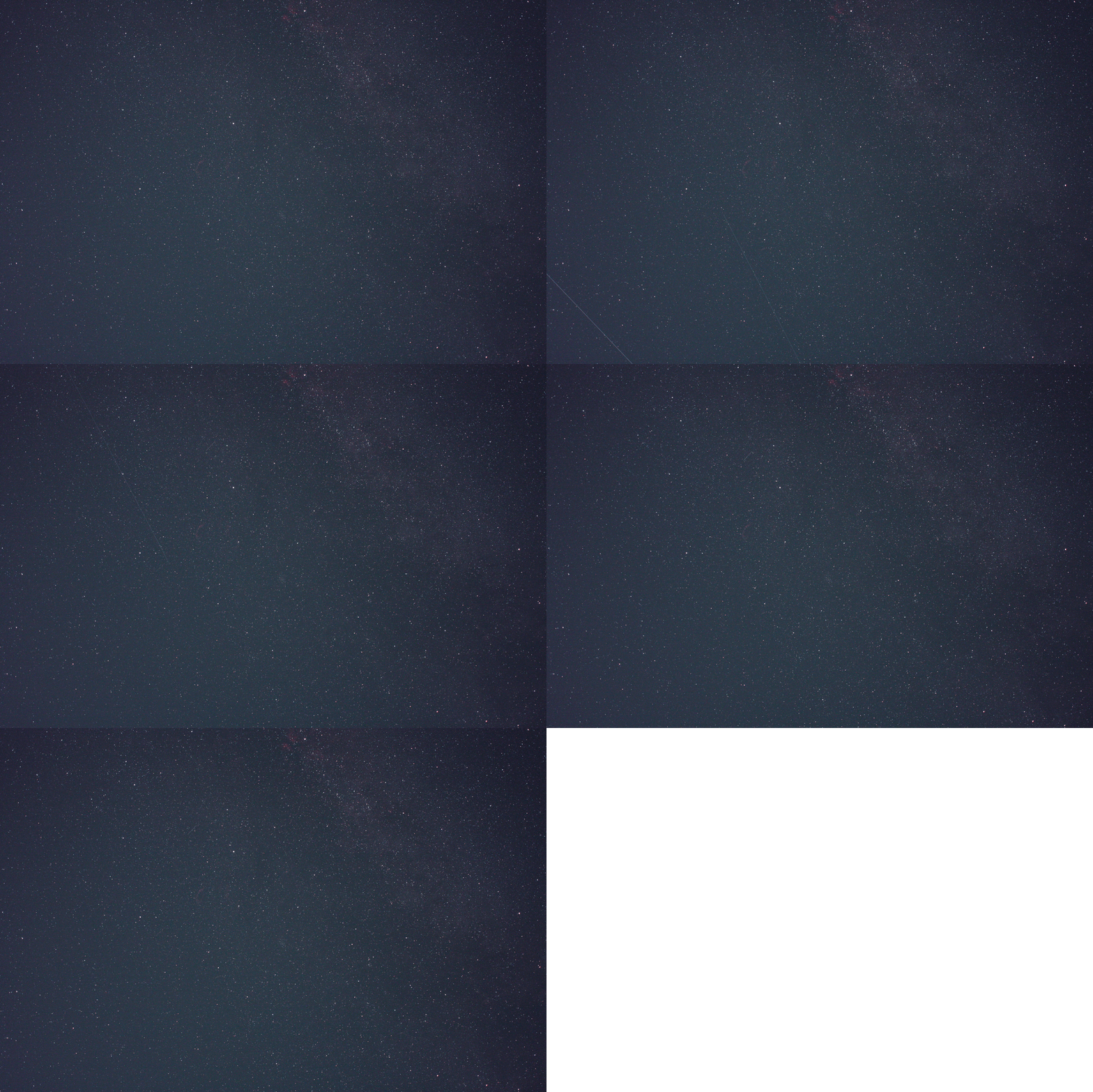
This tumbling object is another that has a notably red tinge. Presumably we are looking at reflected sunlight so what produces the strong colour is a curiosity.


animated gif. 1.72mb
Lens 40mm. 40 second exposures
(click thumbnail for large version)

8.9.13

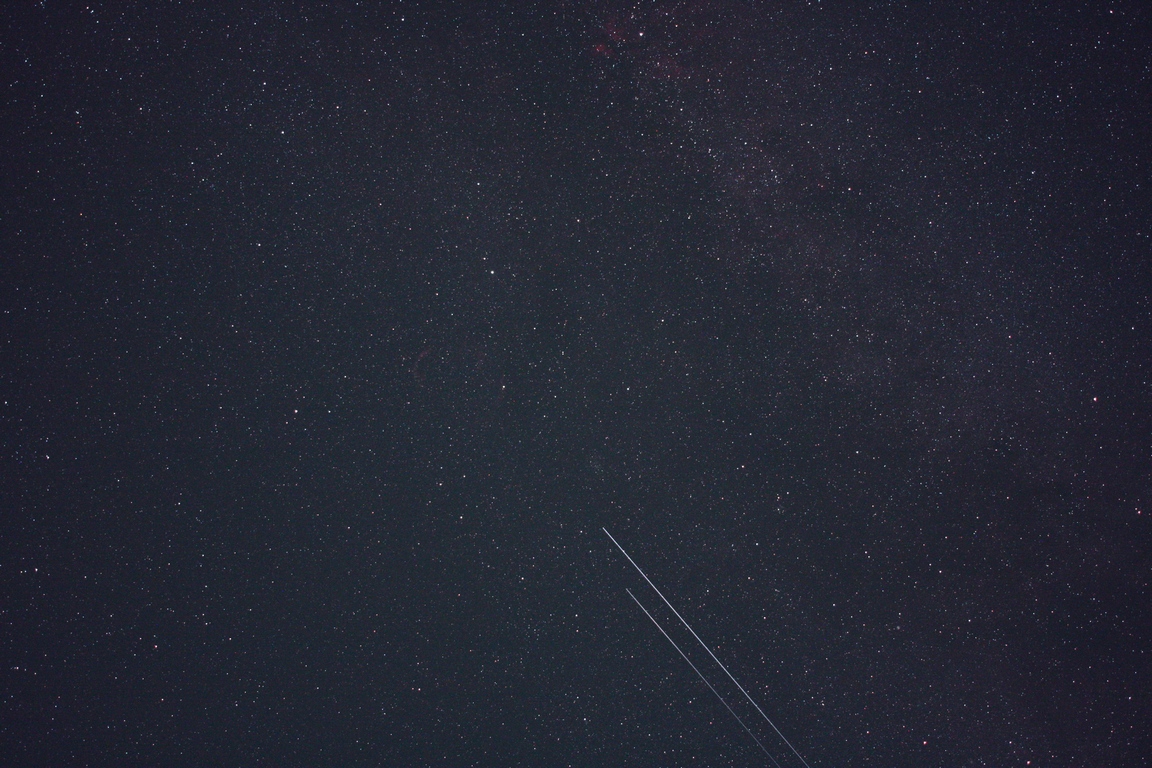
It pays to wait

Somewhat annoyingly I switched off the camera just as this, brighter than usual, pair of (presumably) NOSS satellites entered the frame. A complete sequence of their passing would have been appreciated.


Lens 40mm. single 40 second exposure

Two fast, one slow

Some objects travel very slowly. Compared to the two obvious trails this object (toward upper centre of frame and moving to left) is positively pedestrian. At 40 secs exposure per frame it took well over 20 minutes to pass across the field of view.


animated gif. 3.18mb
Lens 40mm. 40 second exposures
(click thumbnail for large version)

4.9.13

Waiting for buses

Capturing satellites seems a bit like waiting for buses....they all come at once when they do appear. This amazingly synchronous sequence is a bit larger than usual @ 6mb so may take a moment to load.


animated gif. 6.00mb
Lens 40mm. 40 second exposures
(click thumbnail for large version)

2.9.13

Flashing pair

This trio of close following trails had a couple of flashers. The first one has an interesting red component. The last one passes near to the Veil Nebula which is faintly visible on the frames. An oddly lit aircraft at bottom right completes this busy sequence.


animated gif. 4.30mb
Lens 40mm. 40 second exposures
(click thumbnail for large version)


18.8.13

Touch of yin & yang

This satellite looks like opposing meteors as it sails past the Delphinus quartet.


animated gif. 2.73mb
Lens 28mm. 40 second exposures
(click thumbnail for large version)

13.8.13

More flashes


Still no luck with capturing a Perseid meteor but this odd sequence of flashes appeared at bottom centre just before a passing aircraft came through the frame.


animated gif. 2.91mb
Lens 28mm. 40 second exposures
(click thumbnail for large version)

6.8.13

True & false


My previous post mentions noise artifacts that can be produced within the camera . These are relatively rare and initially had me thinking I was looking at some legitimate and very unusual objects until some dark frame tests revealed their true identity. It is quite a coincidence that my next session produced a satellite flash and a camera artifact close to each other on the same frame. This two satellite plus artifact sequence shares the frame with the distinctive quartet of stars in Delphinus.


animated gif. 2.38mb
Lens 28mm. 30 second exposures
(click thumbnail for large version)

4.8.13

A flash with CA

As we are now in the period when Perseid meteors are likely to appear I've decided to use my wider 28mm lens to stand more chance of picking one up. No luck so far with meteors but another mystery single flash was detected (visible lower right).
I have found that sometimes the camera itself can occasionally generate a bit of random noise (other than hot pixels) but such noise is quite easy to identify on enlargement. My 28mm lens suffers some CA around the edges when wide open which shows as offset spots of red. This particular object has an associated red spot so confirms it came via the lens.

animated gif. 1.49mb
Lens 28mm. 30 second exposures
(click thumbnail for large version)

2.8.13

A slow one

At 25 seconds per frame this object appears to be travelling relatively slowly. Its fleeting appearance here covers a period of around 4 minutes.


animated gif. 4.86mb
Lens 40mm. 25 second exposures
(click thumbnail for large version)